

Cycling/hiking Shikoku’s 88 temple pilgrimage route in Japan: Temples 1 to 21
Becoming a pilgrim
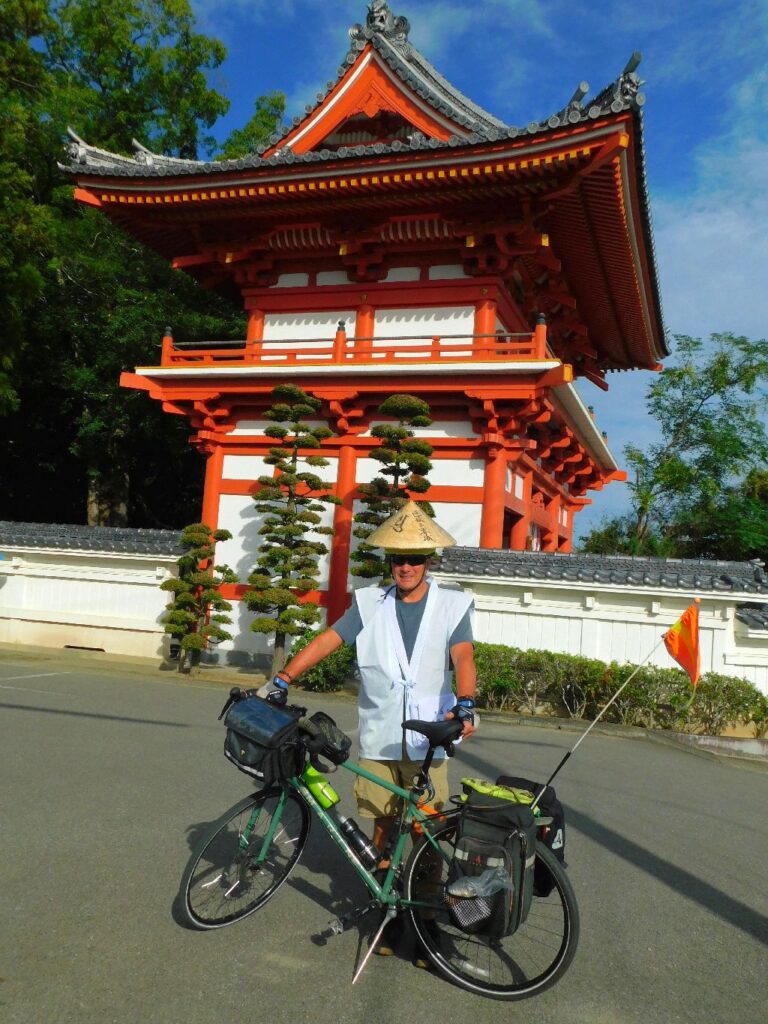
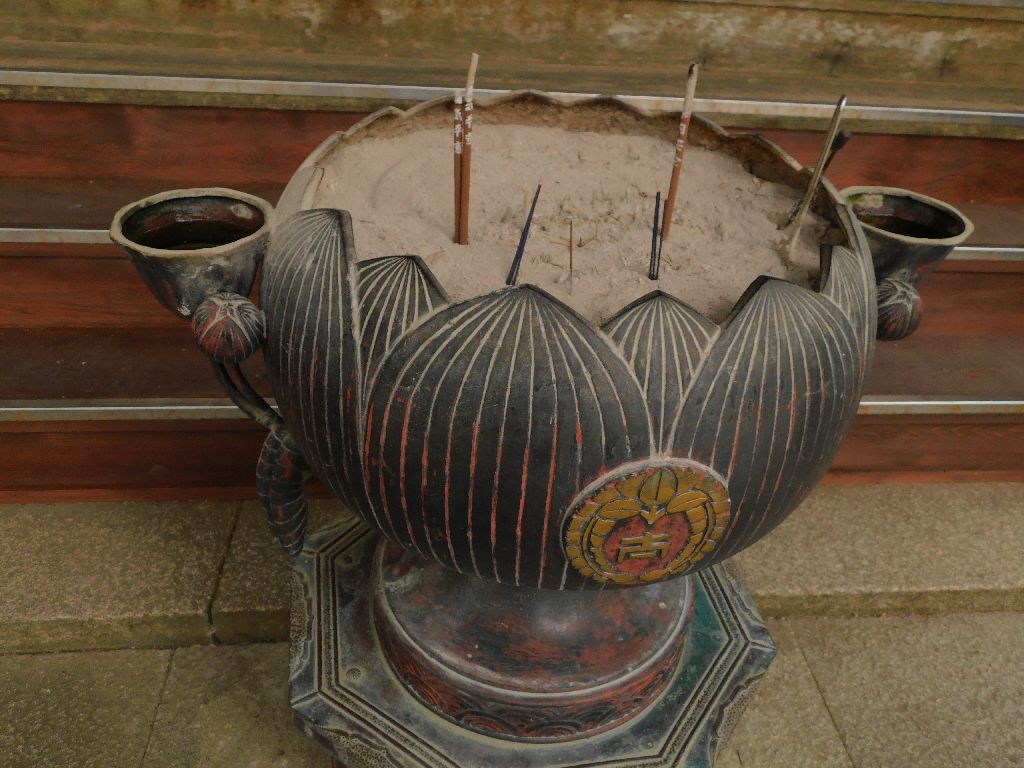
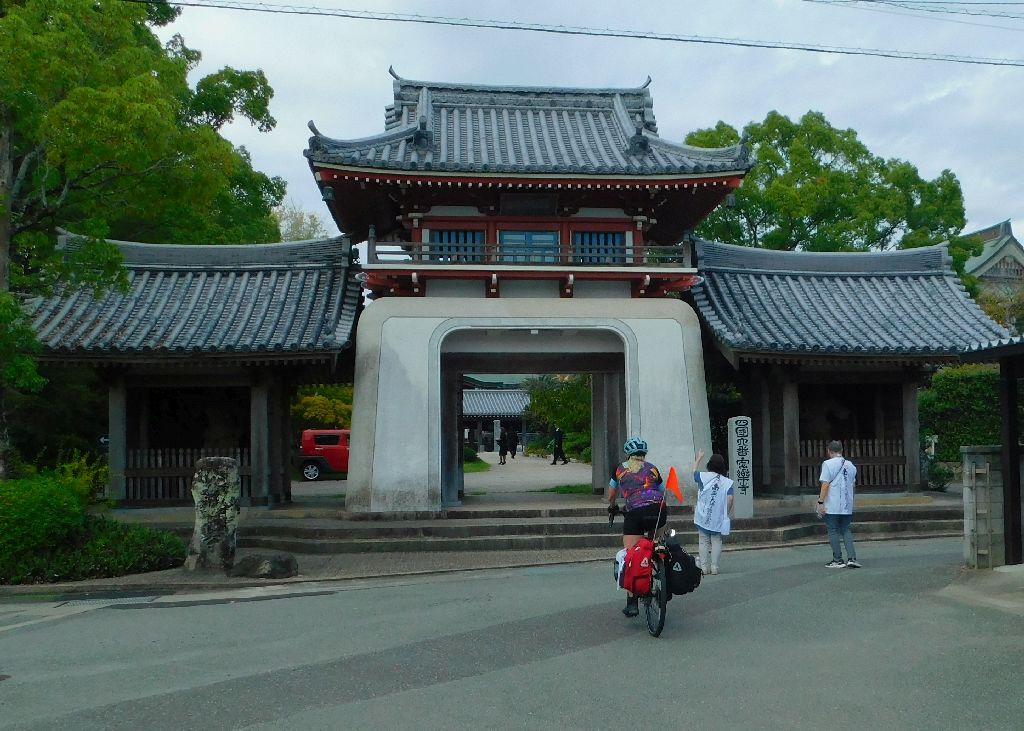
Self-consciously, my husband, Lorenz, and I walked to the entrance to Temple 1, Ryozenji, to perform the sacred rituals for the first time. Dressed in crisp, new, white henro (pilgrim) vests, we bowed with hands in prayer at the temple’s imposing wooden entrance gate, flanked by scary demons. Protectors of the dharma (or sacred Buddhist teachings), the eight foot scary, wrathful deities glared at me. I swallowed hard before stepping past them. Was I worthy of entering? I am not Buddhist. Nor is Lorenz. We had come to hike and bike the Henro Michi for personal, not religious reasons.[i] Still people from all faiths, and no faiths, are welcomed to walk, bike, take buses or even drive to worship at the 88 temples on this thousand year old pilgrimage that spans over 1040 kilometers around the traditional island of Shikoku, Japan.
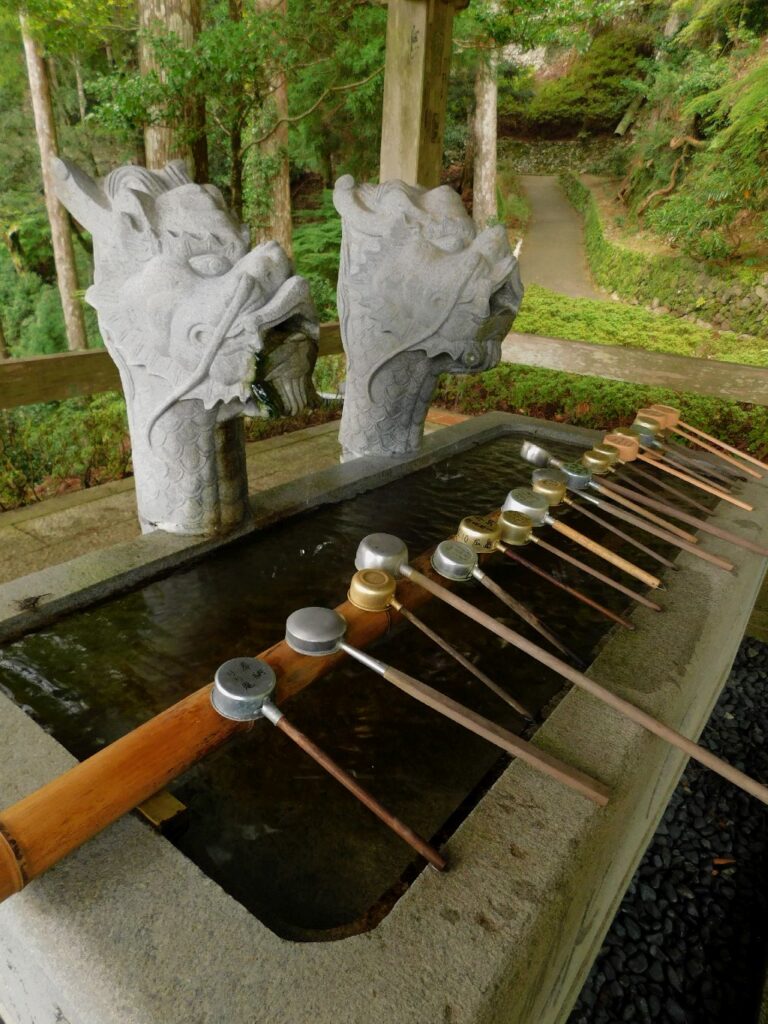
Studying the instructions from the indispensable, Shikoku Japan 88 route guide, we began the rituals. At the stone fountain, I dipped a copper ladle into the water flowing from the mouth of a carved dragon and washed my hands. Stepping up to the tall wooden bell tower, Lorenz grabbed the long swinging wood pole and hit the enormous metal bell to announce our arrival. We fumbled as we lit our incense sticks below the steps to the temple.
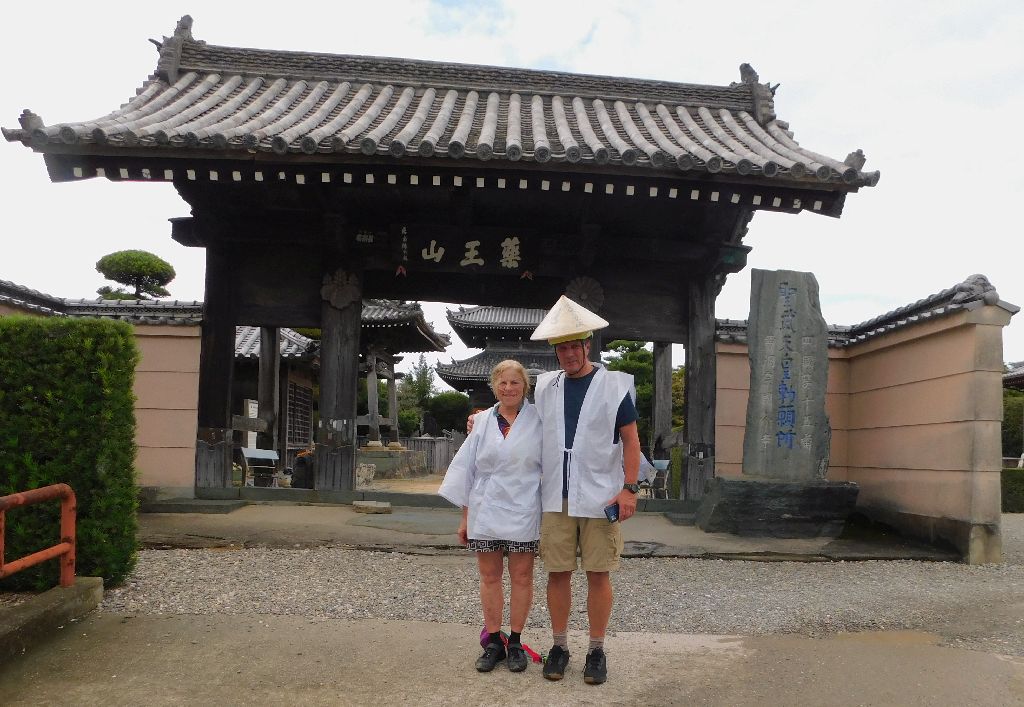
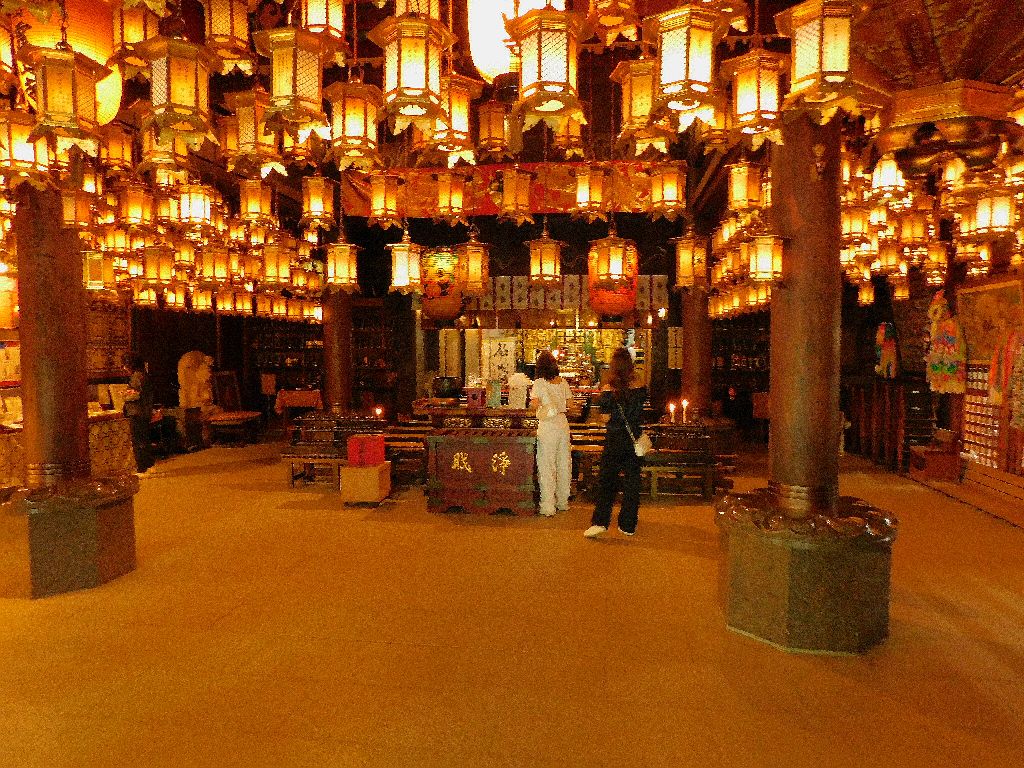
Then, after several minutes debating how to fill out our osame fuda and where to deposit donations, we nervously followed the motions of a confident Japanese couple in front of us. Unfamiliar with Buddhist prayers, I listened in awe as they recited the lyrical heart sutra. Finally, we walked to the temple office. Fascinated, I watched the monk dip his brush into the ink and write a series of Japanese characters down the page of our stamp book.
“How beautiful!” I exclaimed, looking at the bold calligraphy marking our first temple visit. Proudly, Lorenz tucked the red, hard-cover, bound volume into our pilgrim bag.
The hot, late September sun radiated harshly as Lorenz donned his tan sedge hat—now attached to his bike helmet with zip ties. Excited to begin our journey, we took photos in front of our bikes; each loaded with two small panniers and a set of hiking shoes tied on top with bungee cords. And then we set off on one of the most unforgettable journeys of my life.
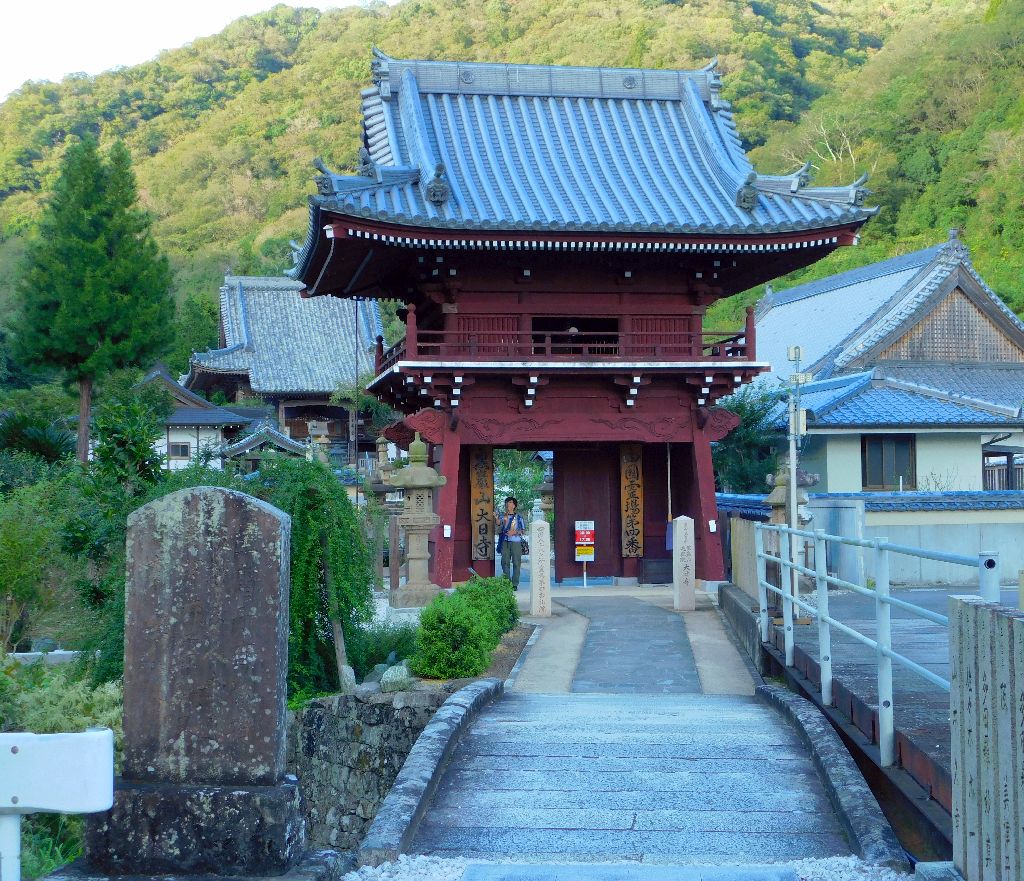
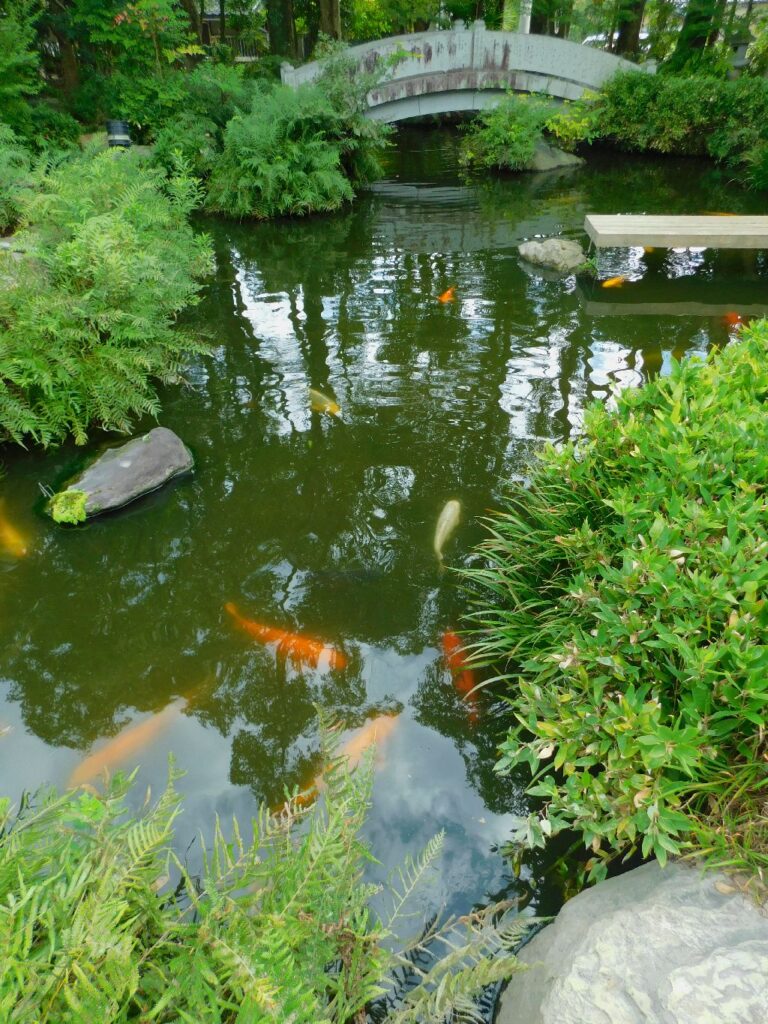
Gradually over the next week, we adjusted to our new pilgrim lifestyle and rituals as we pedaled up and down the (relatively) flat, urban Yoshino River valley. Struggling to find the Japanese henro signs indicating the twisting turns of the walking pilgrim route, we gave up after Temple 3 and switched to Google maps. “Are you sure this is the right route?” I grumbled as we pushed our bikes up a steep potholed trail under the highway. Suddenly a tall, red, wooden entrance gate appeared, revealing a set of lovely wooden buildings cascading down the hilltop. We had found Temple 4, Dainichiji. Bowing to enter, we crossed a stone bridge over a lily pond and washed our hands at the babbling fountain. The motions were still awkward. But I felt proud that for the first time we had performed them without looking at our pilgrim book for instructions.
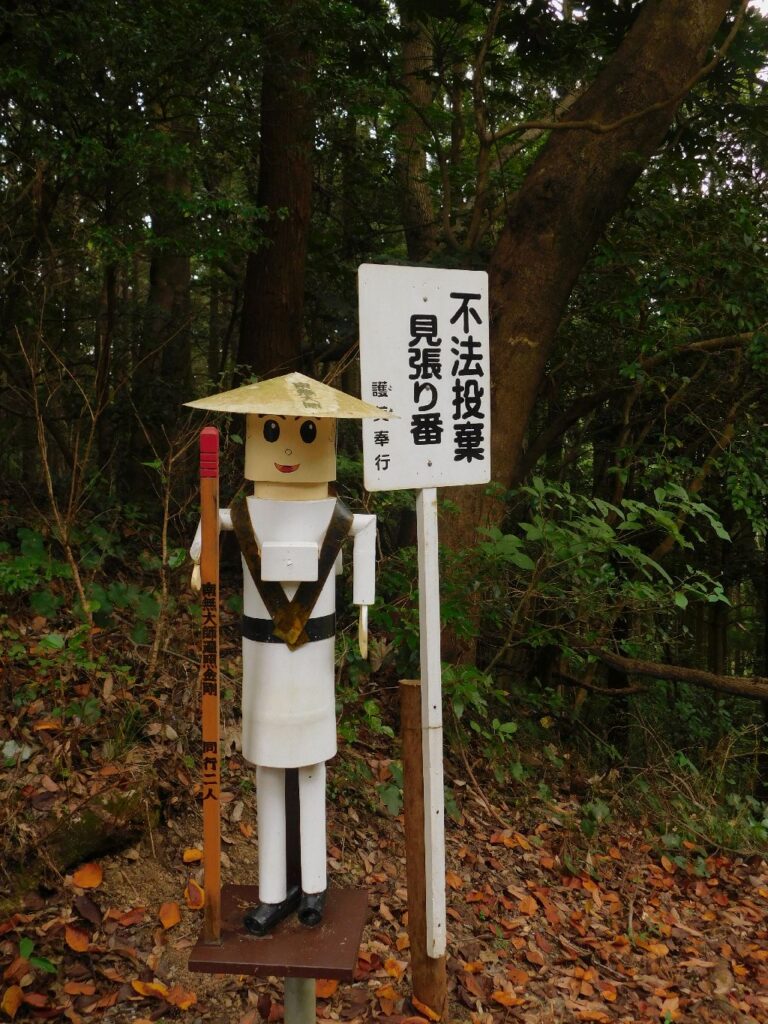
That night, Lorenz and I stayed in our first henro homestay near Temple 5, a modest traditional Japanese home, with tatami mat floors, futon matresses on the ground and shared bathrooms. The dinner was…interesting. Pickled vegetables, seaweed, rice, a slice of dried fish, and two small squares of pork in a brown sauce. Sitting around the long low table, we laughed and chatted with Rosa and Trevor, two pilgrims from Portugal and South Africa. In the weeks to come, Rosa and I updated each other on WhatsApp, sharing our joys and challenges, and pondering what it meant to be on this pilgrimage.
At Temple 8, Kumadaniji, I listened raptly to the prayer chants and bell ringing of a group of bus pilgrims who had hiked the steep stone steps to worship at the Daishido (the temple in honor of Kobo Daishi, the revered 8th century monk who founded the temples). Lorenz swung the heavy beam into the enormous bronze bell at Temple 13, its ringing echoing up and down the steep, lush, green mountains of the Shikoku range.[i] We then turned east to pedal along the pretty Akui River, past small villages of hodge-podge, silver tile-roofed houses. Back in the sprawling busy city of Tokushima, we retreated to the serene temple enclosure at Idoji, Temple 17. Cooling off in the shade on a bench, Lorenz and I wrote blessings for our friends and family on the nameslips or osame fuda, while we snacked on rice crackers. Relaxing in the gardens filled with statues, tucked away from the noise of the surrounding city, I felt confident we had this pilgrim thing down. Only seventy-one temples to go. No problem.
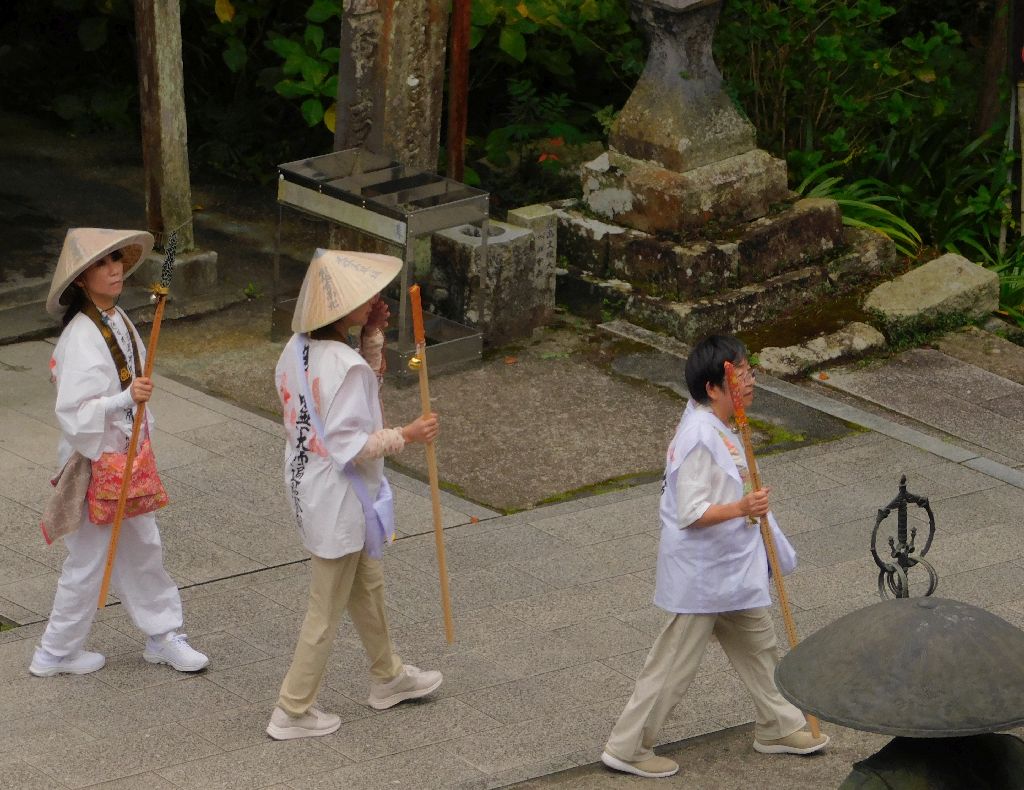
Two days later, I wasn’t so sure. We bumped along a potholed bike path past megastore after megastore, on the noisy, traffic filled highway out of Tokushima. Passing two white-robed walking pilgrims, we waved. Weighed down by their heavy packs and sweating in the hot, humid eight-five degree October sun, they looked even more miserable than we were. I thought of the many long, shoulder-less highway stretches ahead, glad that we had decided to cycle, rather than walk the 1040 kilometer pilgrim route around the island.
That night, in a farmer’s beautiful wood-beam pilgrim homestay, Lorenz and I puzzled over Google maps and the Shikoku Japan 88 Route Guide—the pilgrim’s essential handbook—trying to find a way to get to the remote mountainous temples 20 and 21. Perched on two separate 1500 feet mountaintops, Kakurinji and Tairyuji temples are designated henro korogashi or temples ‘where pilgrims are knocked down’ due to the difficult climbs and access.
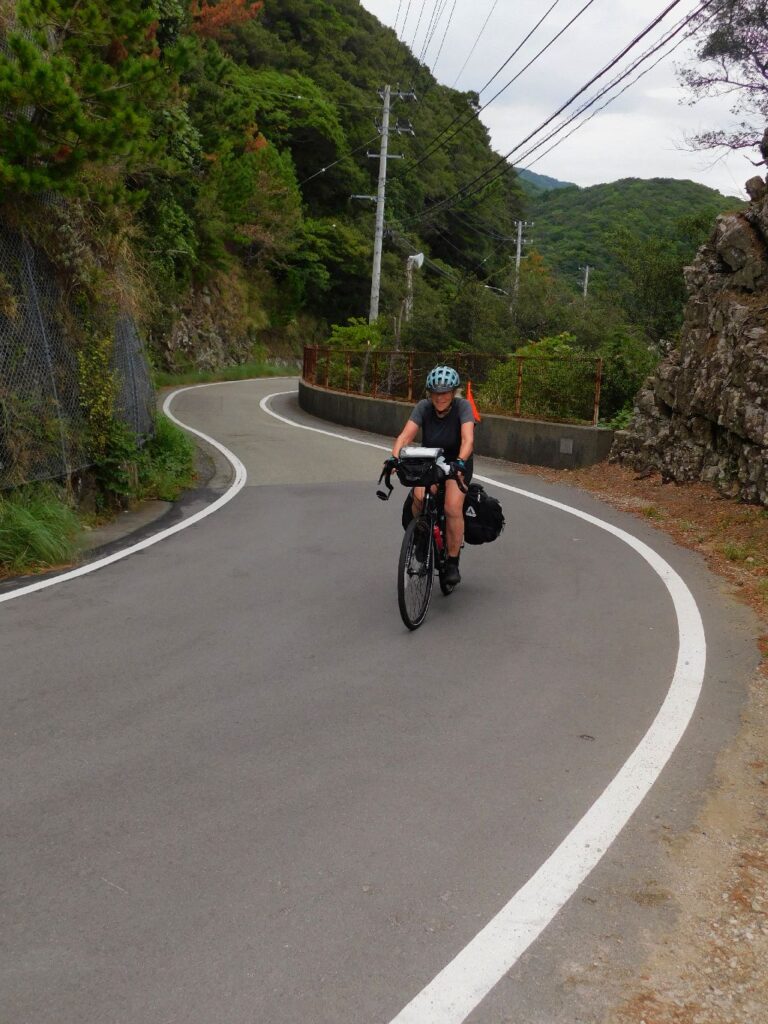
“No. It can’t be!” I complained as we suddenly realized that, compared to the hiking route, we were going to have to bike an additional 16 kilometers and hike another 6 kilometers up and back down a steep 1500 foot trail to reach Temple 20. Cycling was not an advantage at all! While the walking pilgrims crossed the mountain ranges on a direct hiking trail through the woods to the temples, we would have to cycle a long detour around the mountains to reach the more remote temples by bicycle and on foot. It was beginning to occur to me that there were no easy short cuts on this pilgrimage.
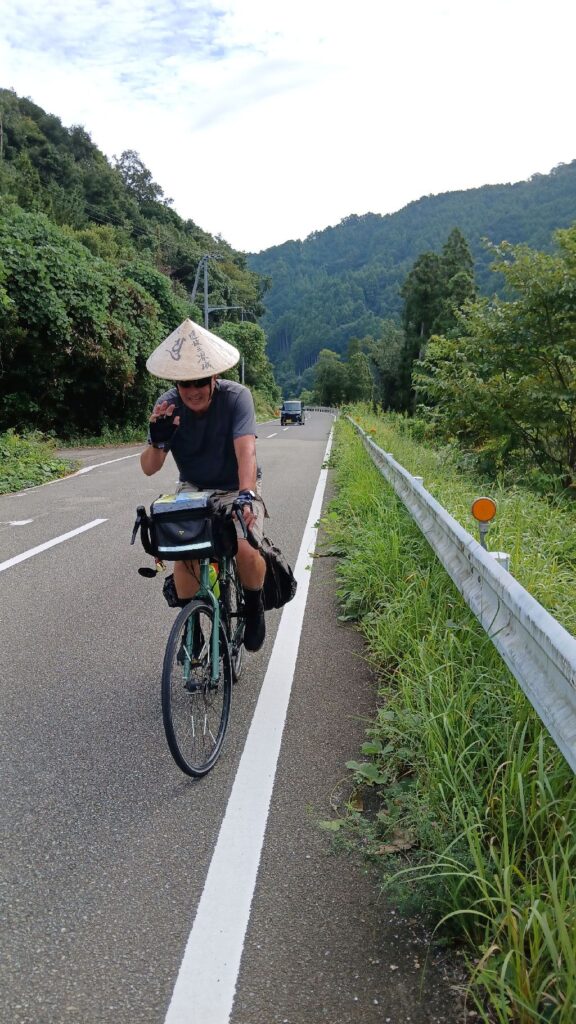
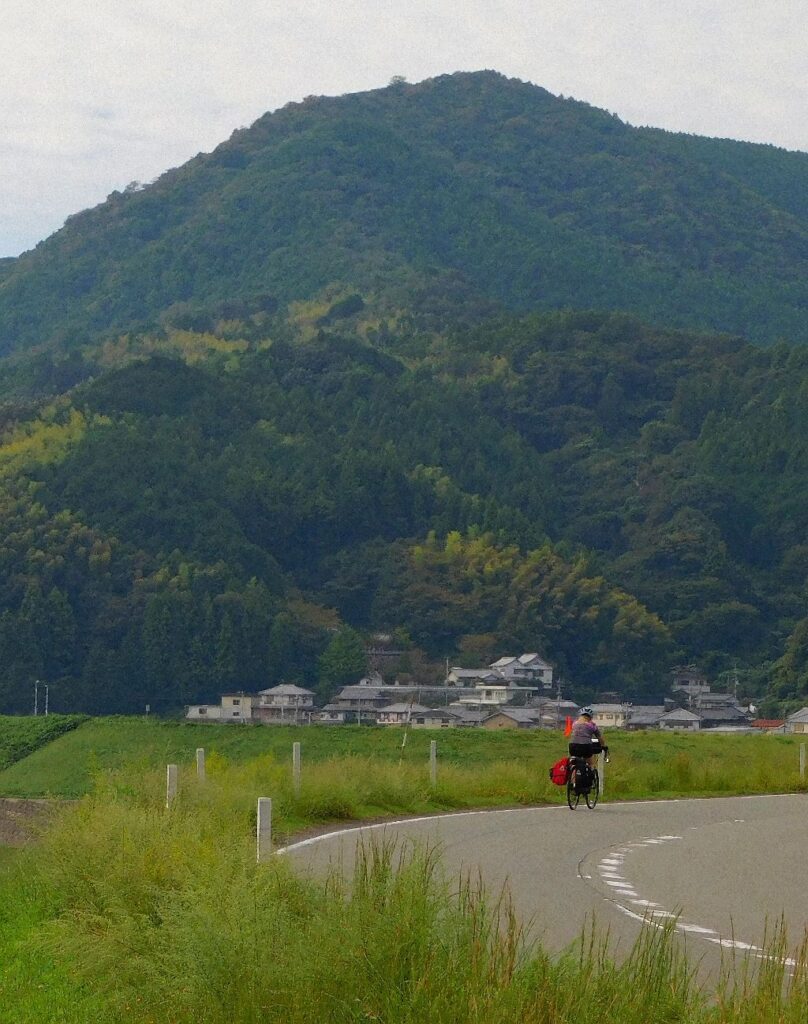
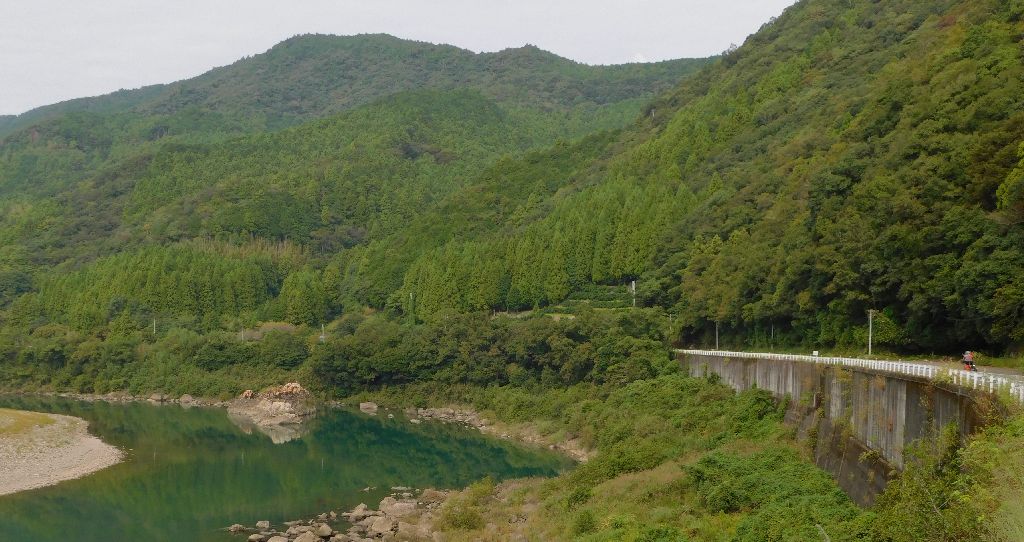
Still, cycling the long way had its gifts too. “The extra sixteen kilometers were worth it!” I called out to Lorenz the next day as we pedaled under the cooling shade of cedars and maples, along a beautiful quiet, sparkling river, winding below rugged Mount Washio. At a pilgrim rest hut at the bottom of the trail to Kakurinji, we locked up our bikes and set out in good spirits up the steep trail. Within a few minutes the ‘trail’ had become hundreds of uneven, steep stairs that wound up and up and up endlessly for the next three kilometers.
“I need a break,” I huffed, dripping with sweat two thirds of the way up. I leaned over to stretch my tired legs. Then, screamed as an enormous two inch yellow-and-black-striped insect buzzed angrily onto my arm. And stung me! Hurriedly, Lorenz slapped on a paste of water and baking soda from our first aid kit, hoping it would draw the poison out. My arm was red and hurt like heck. But it seemed ok.
At the top of the mountain, we wandered around Kakurinji’s large temple complex, admiring its beautiful statues, long tree lined walkways and elaborately carved side shrines, before heading to the temple office to get our stamp. “You’d better read this, Paula,” Lorenz pointed, concerned, to a sign below the window of the office. Warning! Stay clear. Giant Asian hornet’s nest about 500 meters down the trail. “It’s serious!” Lorenz showed me his phone listing the dangers of giant Asian hornet stings: “Necrosis, respiratory failure, kidney failure, liver damage. And death.” Nervously, I slapped on another dose of the baking soda home remedy and hoped for the best.
As we trudged down the steep, treacherous stairway to our bicycles, I couldn’t help remembering the email from our friend, Naoki, in Japan. Hearing of our plans to cycle the pilgrimage, he had warned us in his polite, indirect way. “Are you planning to pilgrim to all 88 temples? I think it is kind of hard work.” I had shrugged his comments off. Just six months previously, we had spent a month cycling through the 10,000 foot southern Alps of New Zealand. Shikoku couldn’t be that hard!
Now, I felt more than a little humbled. “Perhaps I should have taken Naoki’s warning more seriously,” I worried.
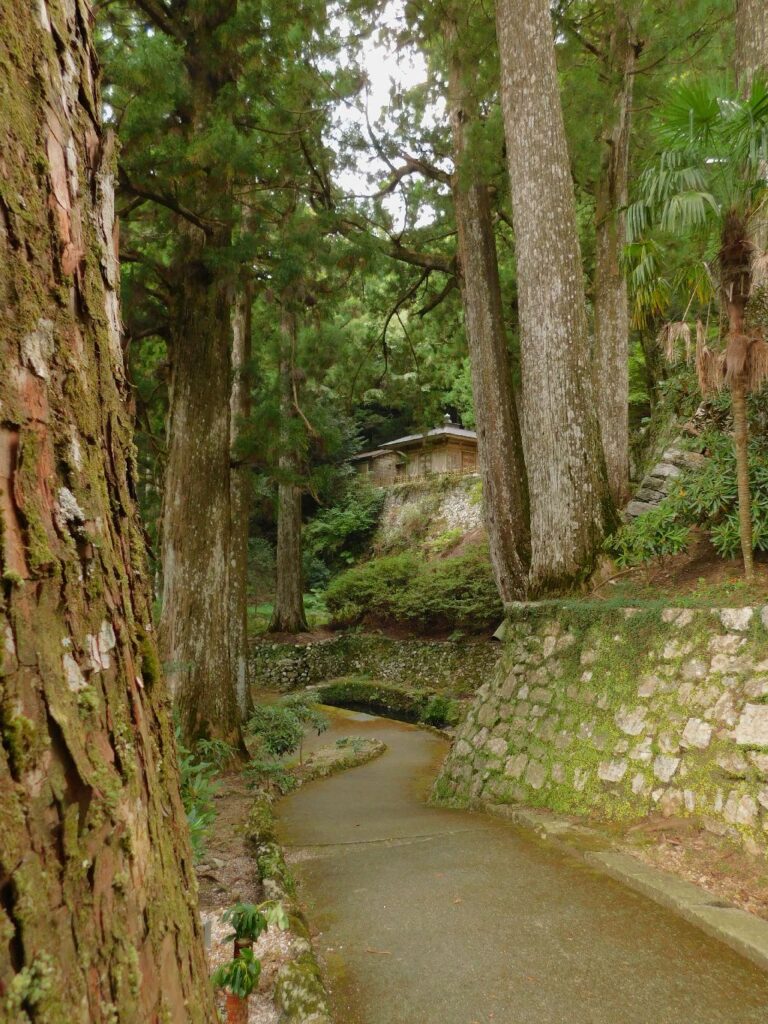
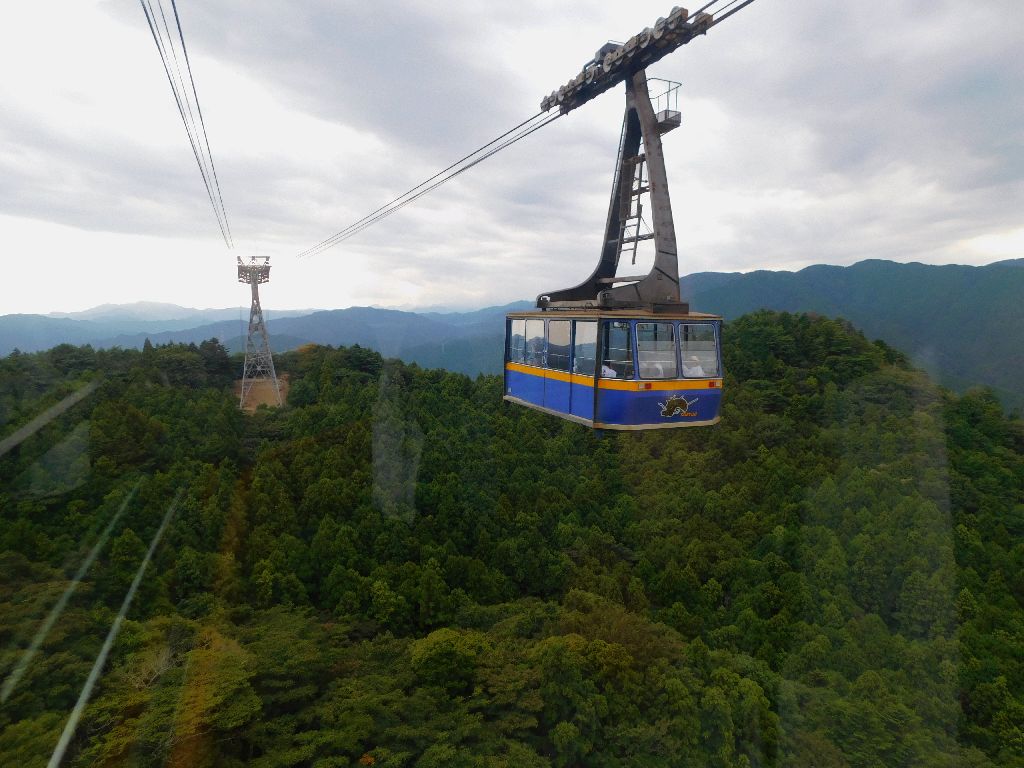
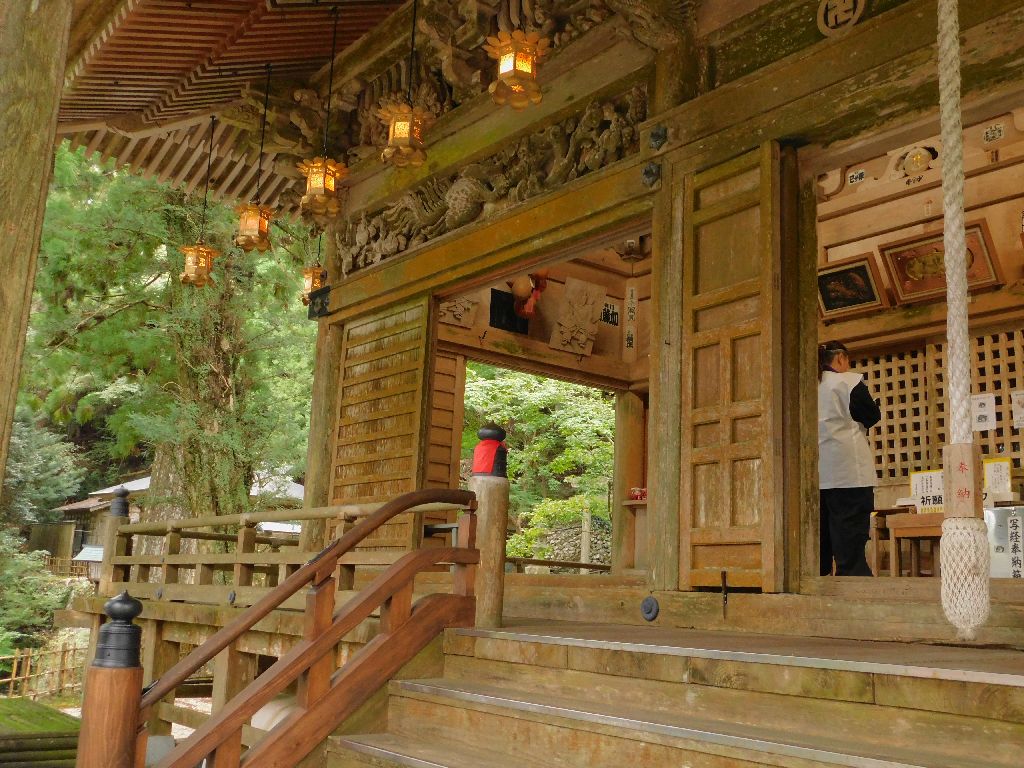
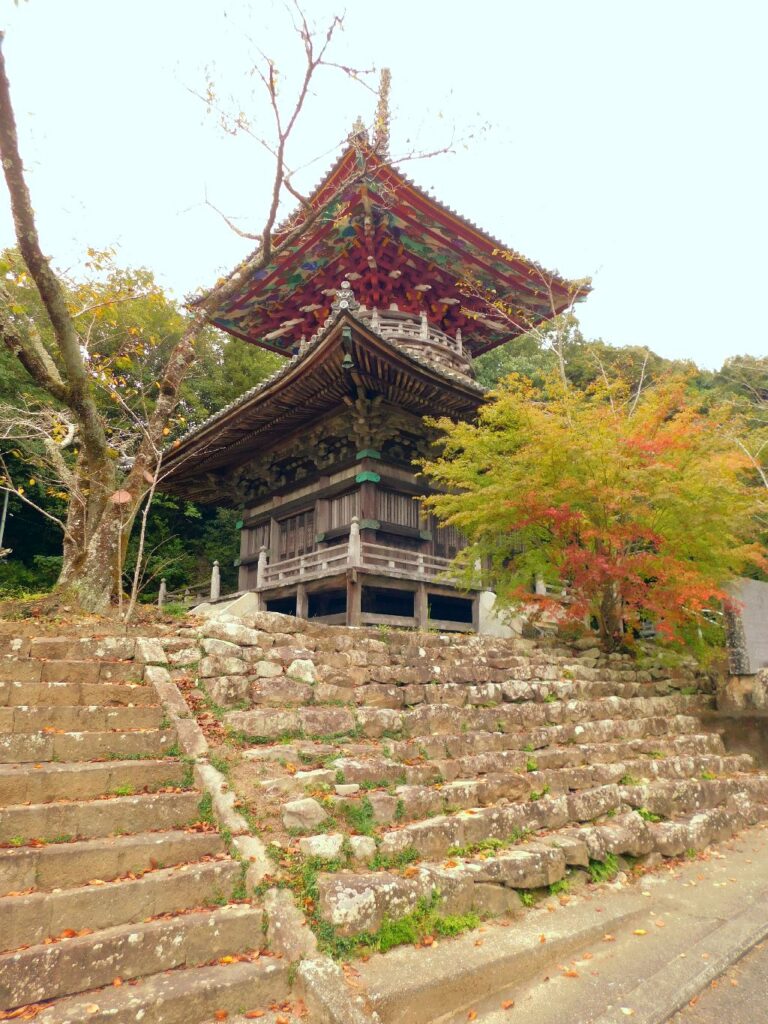
There was no road up to Temple 21. So, after pedaling another seven kilometers, we caught the ropeway (cable car) to the famed Tairyuji temple. Arriving just an hour before closing and sunset, we were practically alone among the beautifully manicured Japanese gardens. We wandered below the enormous hundred-year-old cedar trees, which cast long shadows over the haunting and mystical temple complex where the monk Kobo Daishi had first completed his ascetic training. What a beautiful mountain retreat!
That evening, as we checked into our hotel below the ropeway, Lorenz and I watched a tall, muscular and heavyset, red-haired pilgrim stumble and limp into the foyer, groaning under his heavy pack. Collapsing at the first available chair, he looked like he was going to pass out or die. I suddenly understood the meaning of henro korogashi. Here, in front of us, was a living knocked down pilgrim! Lorenz and I glanced at each other in consternation, as I touched my arm nervously. It had developed a hard red welt that extended to my elbow and was throbbing painfully.
“Please don’t let me be the next henro korogashi,” I prayed.
This was not the trip I had naively imagined: Calm, peaceful days of biking along quiet country roads, romantic homestays in historic Japanese guesthouses, and hours of time to reflect on life. Being a pilgrim in Shikoku was none of these things. And yet, as I would discover in the days and many kilometers ahead, it was so much much more.
To read about the next stage of the pilgrimage, go to Cycling Shikoku: Temples 22-51.
[i] You can read about our purpose for going on the pilgrimage, at A return to Shosanji.
[i] We bypassed Temple 12, Shosanji, since we had already (accidentally) visited it on our world cycling tour. Our plan was to end our pilgrimage at Shosanji at the end of journey.
Follow us on Instagram @bike4breath or sign up for our blog at https://bike4breath.com/contact-us/. You might also enjoy reading our book, Breathtaking: How one family cycled around the world for clean air and asthma about our family’s cycling adventures around the world–through 24 countries across Europe, Asia, the South Pacific and North America.
It was great meeting you guys and share the challenges and joys of the journey even when from afar 🙂
We feel the same about you! I think one of the most wonderful aspects of the pilgrimage was meeting other pilgrims and sharing our experiences together.