
Cycling and Hiking Shikoku’s 88 temple pilgrimage route in Japan: Temples 52-88
The pilgrim’s enlightenment
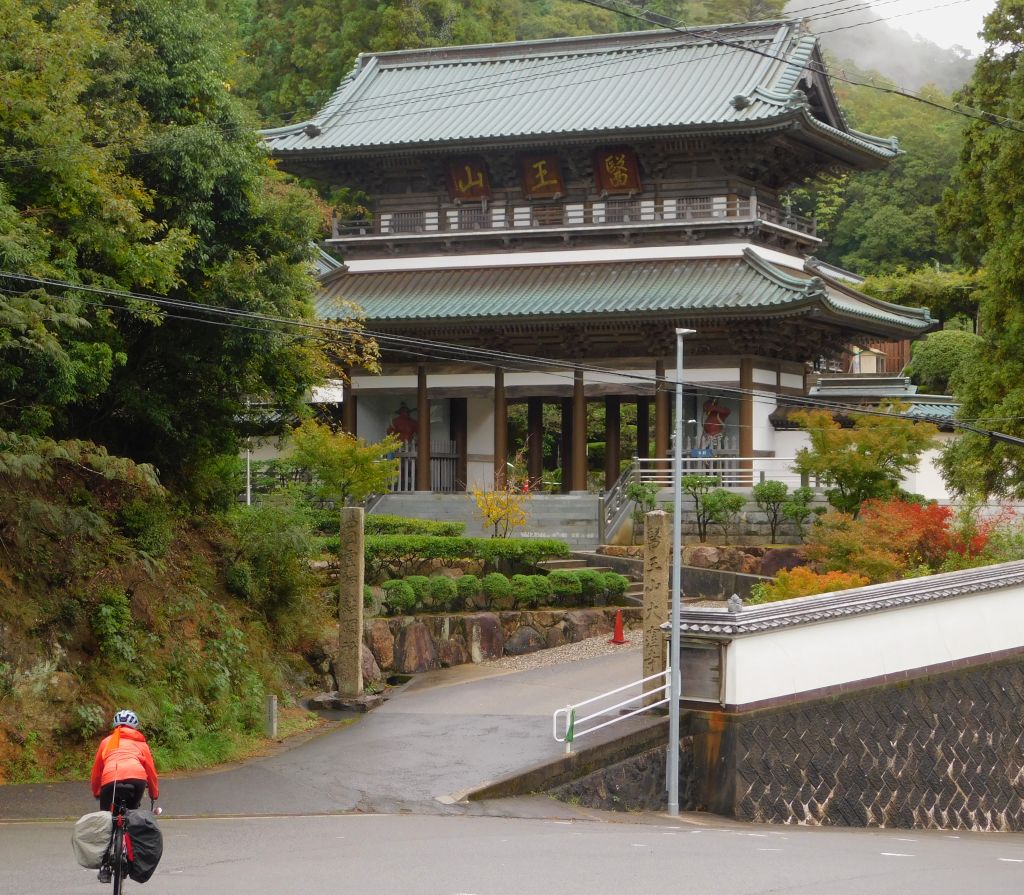
Tears of gratitude welled up in my eyes as the graceful, grey-tiled tiers of the entrance gate to Temple 88 suddenly rose up through the dense thicket of red and orange and green trees ahead of us. We had cycled 937 stunning, torturous, wonderous, soul-searching kilometers around the island of Shikoku on the 88 temple Japanese Buddhist pilgrimage called the henro michi. In spite of our many challenges on this unforgettable one month journey, my husband, Lorenz, and I had made it to Okuboji, the famous final temple! I had been stung by a giant Asian hornet on a remote mountain trail, torn a ligament in the back of my leg from hiking thousands of steep stairs up to precipitous temples and battled a week of debilitating food poisoning. And yet, miraculously, we were here!
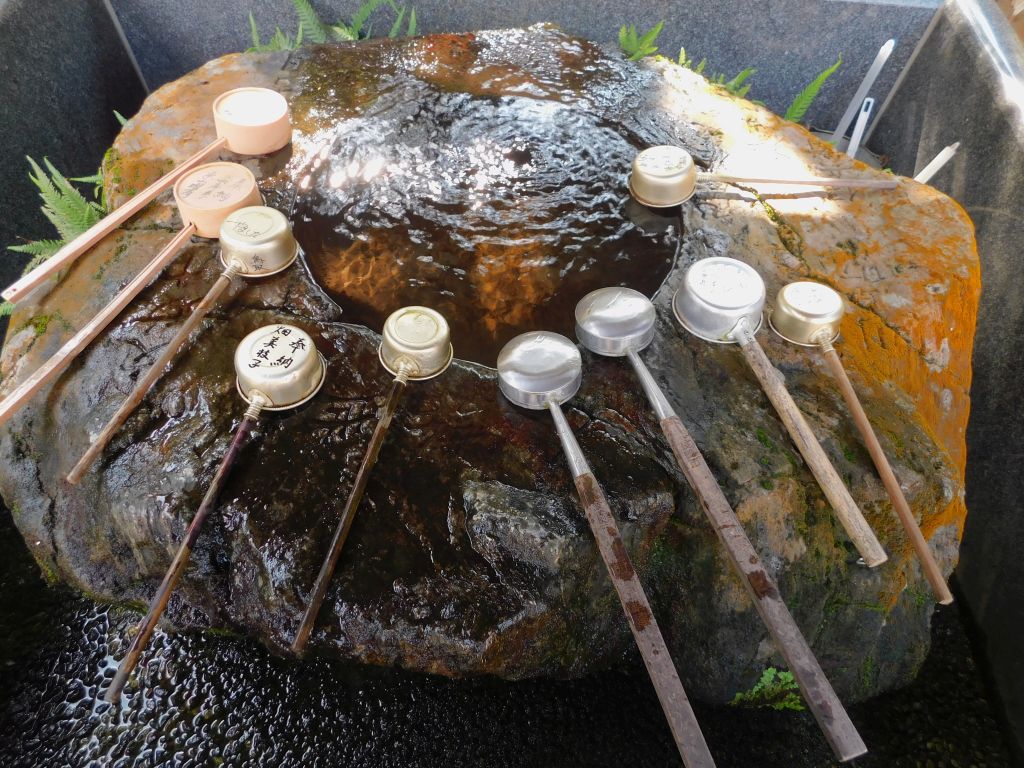
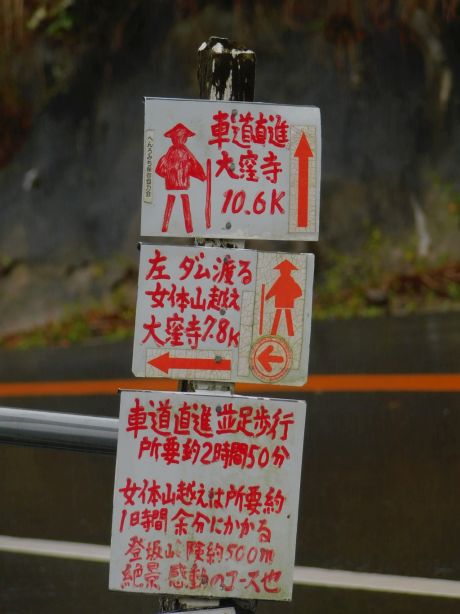
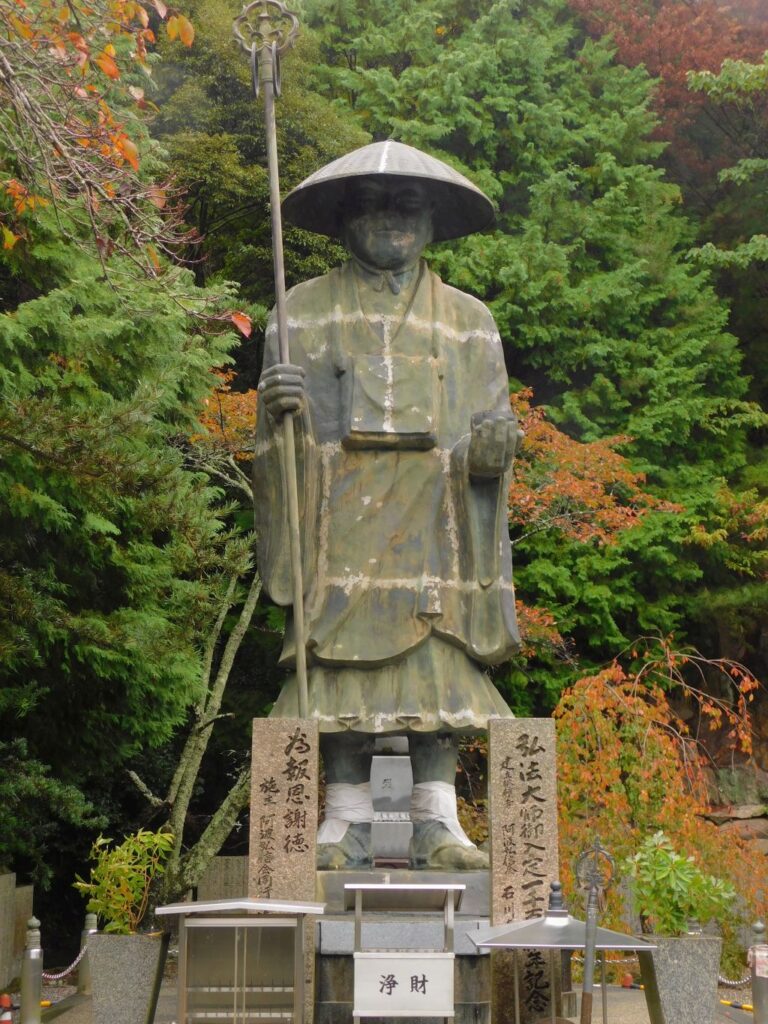
Sweaty from the 1500 foot climb up Mount Nyotai, I shivered in the cool fall air, my chest heaving up and down as I struggled to catch my breath, before hobbling my final, triumphant steps up to the monumental two storied gate. Then silently, I bowed, asking one final time, for permission to enter the temple. I observed the now familiar pilgrim rituals in a blur of joy, relief, and thankfulness: pounding the gigantic bronze bell, pouring water from the babbling stone fountain onto our hands, lighting the musky incense sticks, listening to other pilgrims recite the heart sutra at the temple and finally bowing to the temple and statue of Kobo Daishi, who had founded the temples along this sacred route.
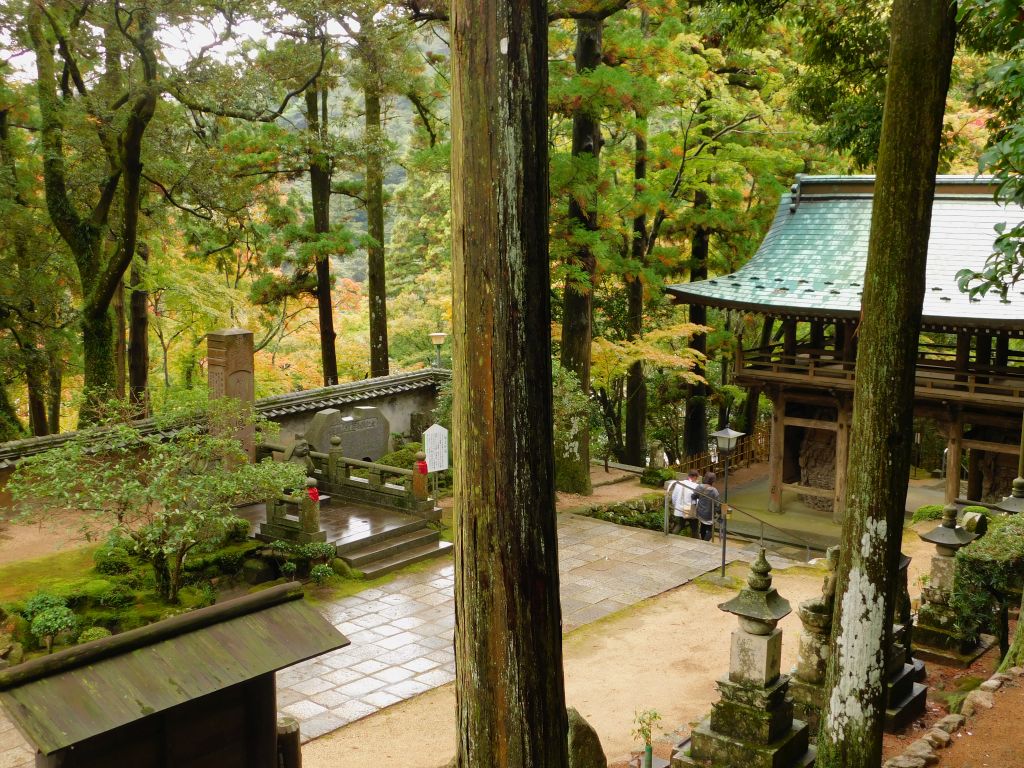
Not willing to leave yet, Lorenz and I wandered the peaceful, mountain temple grounds, feeling as if we were passing through a magical fairyland of early fall orange and red maple branches leaning gracefully over the steep roofed temples and stone paths. Then slowly, we walked to the windows of the temple office and handed our pilgrim’s book to the scribe. As he painted the black, inky Japanese characters with careful brushstrokes, affirming our worship at Okuboji, my mind wandered through our unforgettable journey around Shikoku–over steep, rugged mountains, along windswept coastlines, to majestic, ornate temples overlooking rushing river valleys and quiet, local, wooden temples tucked behind busy, urban streets.
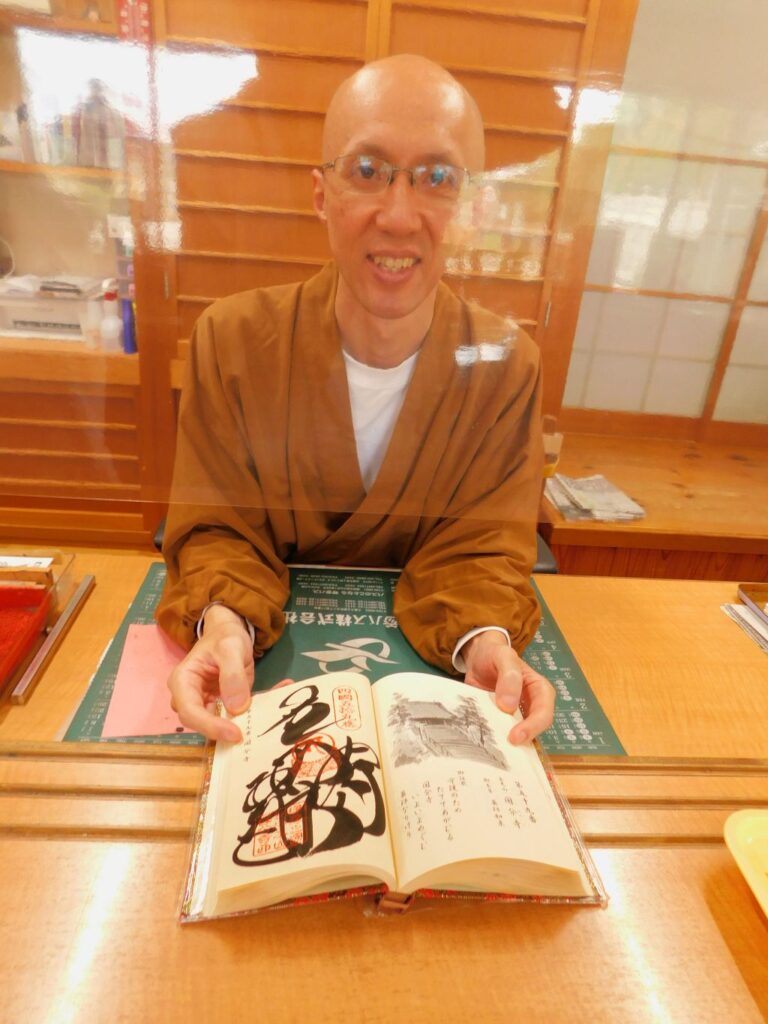
How far we had come from our early days of the pilgrimage! I recalled our first, wondrous yet nervous days learning how to become a pilgrim as we pedaled up and down the Tokushima valley (Becoming a pilgrim: Cycling and hiking Shikoku’s temples 1-21). Next came the ordeal—the most beautiful but also remote part of the journey—as I pedaled injured, dehydrated and dizzy around the wild, steep and empty southern coast of the island (The pilgrim’s trial: Cycling and hiking temples 22-51). Last but not least, after reaching Matsuyama, came the final push of determination and commitment as we traversed the busy, urban, northern coast of Shikoku on our way to Okuboji.
For two days in sprawling modern Matsuyama, as Lorenz and I rested in a beautiful, steel and glass, high rise hotel, I perseverated: should I accept defeat and go home after all my injuries? When we began the henro michi in Tokushima, I had not planned to follow this journey as a devout pilgrim (I was not even Buddhist), but to fulfill a curiosity that had been inspired years earlier when our family got lost cycling on Shikoku and ended up camping at the remote mountaintop temple, Shosan-ji, the twelfth temple on the henro michi (A return to Shosan-ji). Like many of the foreigners who were following this pilgrimage route—from Europe, from nearby Asian countries, from Canada, Australia and New Zealand (and even the rare Americans like us)– I had been drawn by curiosity and a desire to walk and cycle the almost 1000 kilometer route around Shikoku. In contrast to the many devout Japanese pilgrims we saw, whose spiritual goal was to visit every single temple (almost always by car), my dream had been to complete the journey on foot and by bike, without motorized transportation.
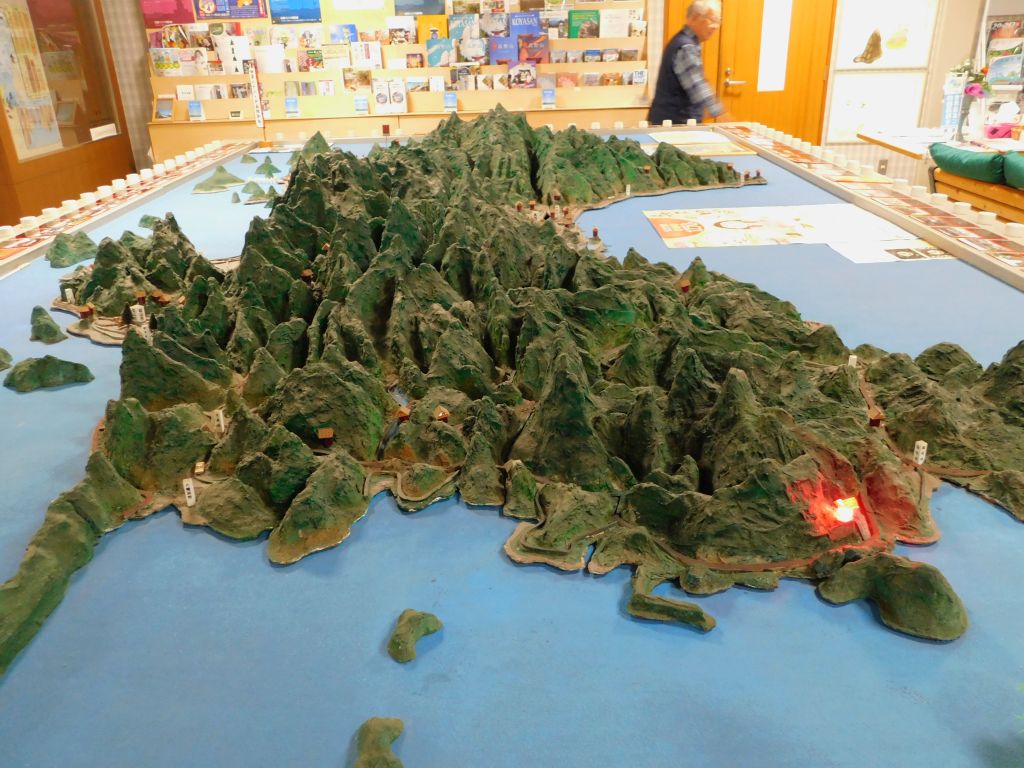
Now my purpose was being sorely tested. I visited a Japanese doctor whose antibiotics and antidiarrheal medications enabled me to eat solid food for the first time in ten days. My right arm, red and swollen from elbow to shoulder from the giant Asian hornet’s sting, calmed down to a light pink. But the pulled ligament in the back of my leg still made walking extremely painful. It was clear that I would not be able to hike up the final steep and rugged henro korogashi (knock-down pilgrim) mountains to temples 60 and 66 and 81 and 82. How could I finish the journey? I did not know, but something deep inside of me insisted that I had to try. Amazingly, I could still bike. And so, we pedaled onwards, determined to complete the circuit by bicycle, even if we would have to bypass the most challenging temples.
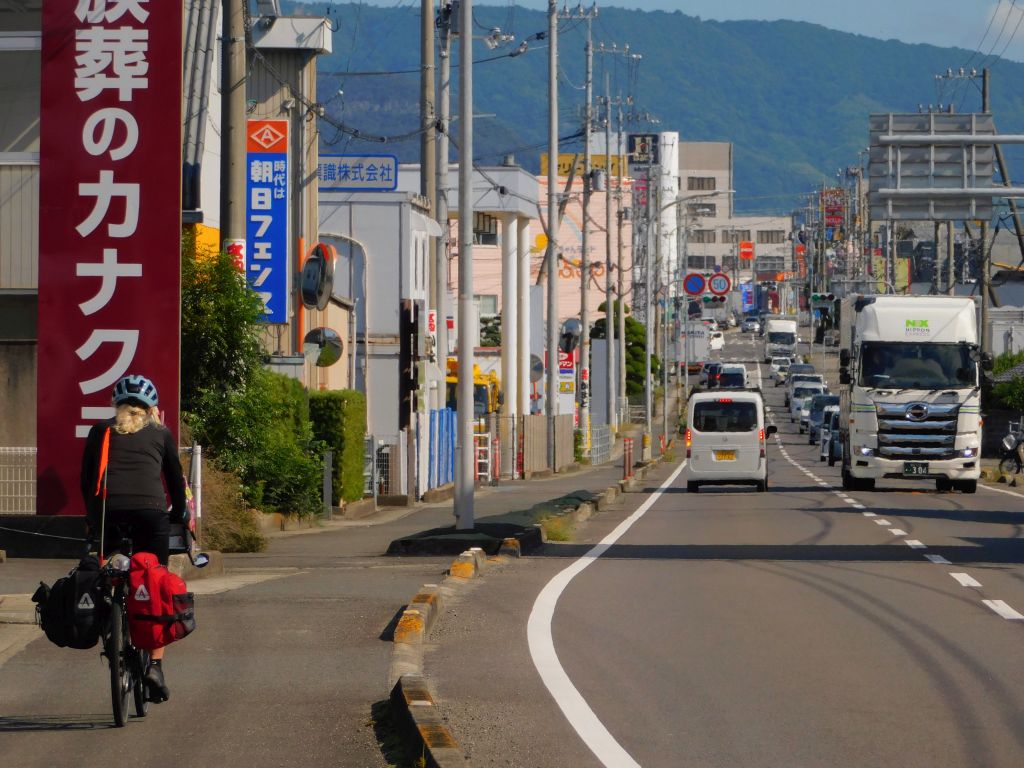
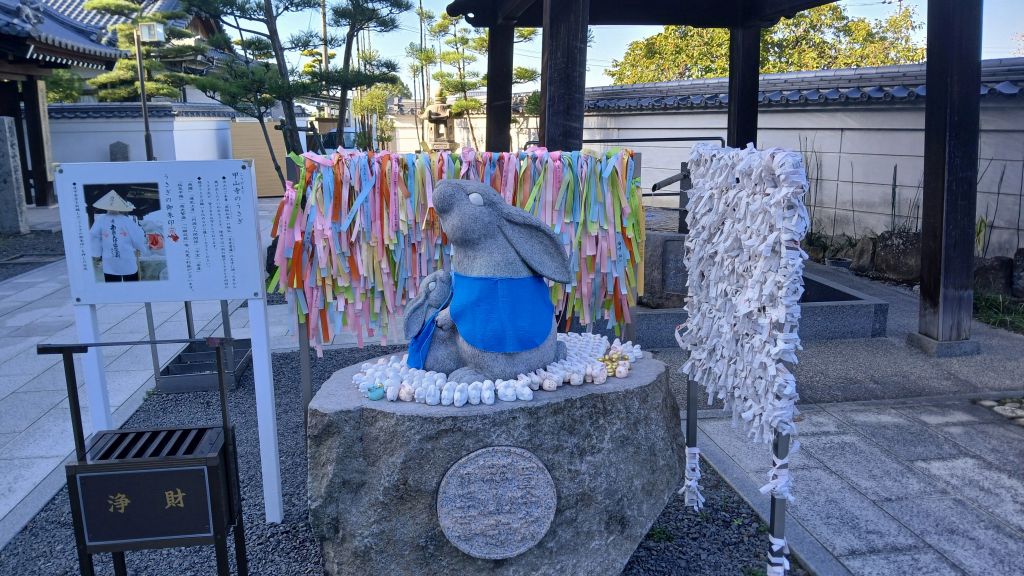
What a change the northern route was from the southern section! Suddenly we were cycling on busy, industrial, urban roads past long stretches of restaurants, hotels and business chains. Gone were the quaint, tiny fishing villages of the south perched on cliffs over wild empty coastlines. Although the ocean was always nearby, it was barricaded from us by train lines and heavy manufacturing operations lining the coast. Instead of remote, majestic mountain temples, we visited small, local temples tucked behind streets filled with teeming businesses. These humble complexes were welcome refuges from the bustling noise of the endless coastal cities. Delightful in their own quiet way, the community temples were filled with mementos of local beliefs and superstitions. Alongside the imposing temples to the Buddha and Kobo Daishi, rows of clothed little statues of spirits offered healing, success, love, and many children to the local residents who prayed there.
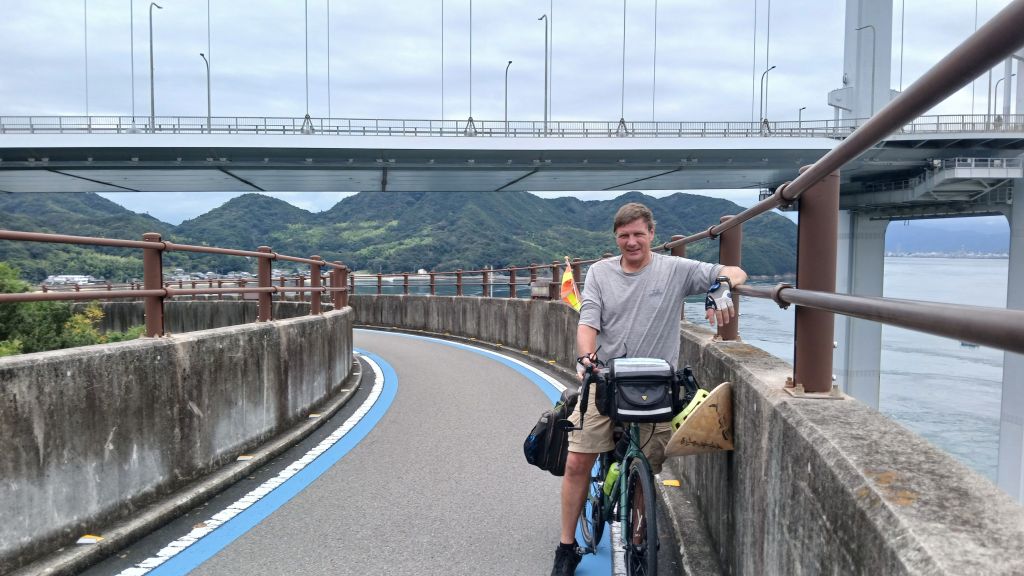
Taking a short break from the pilgrimage, we visited our kind friends, Miki and Naoki, on the island of Kyushu. We purposely returned via the famous and beautiful Shimanami Kaido cycling route from Onomichi to Imambari, pedaling along quiet island coastal roads and over magnificent bridges, hopping from island to island in the Seto Inland Sea.
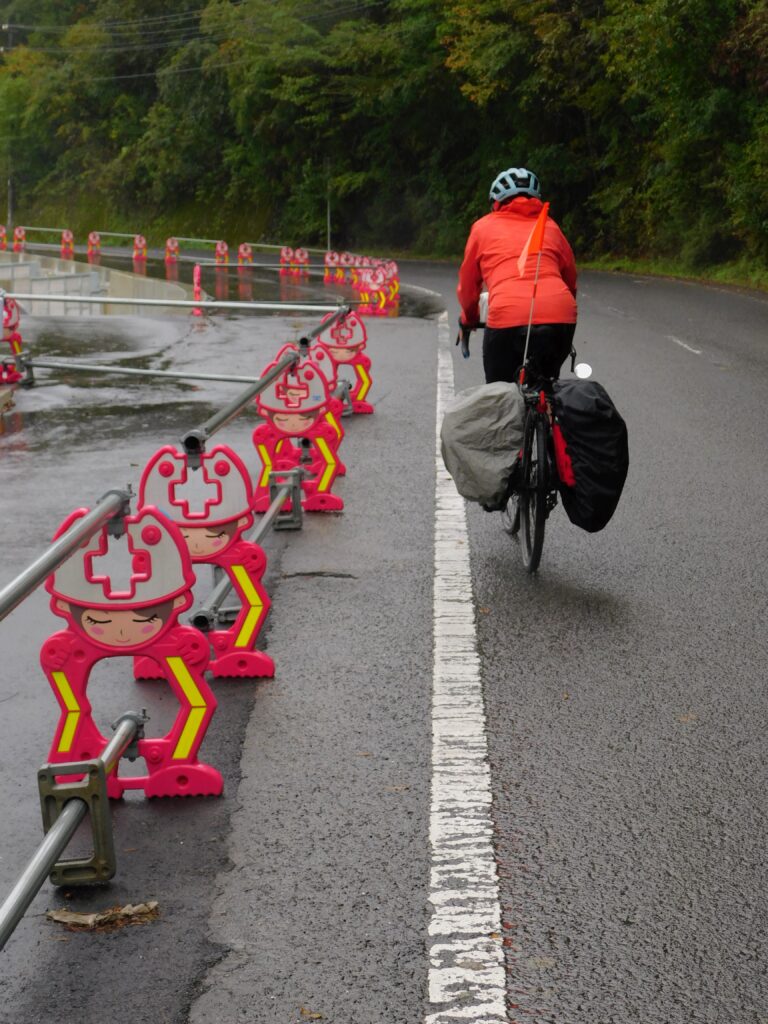
After Imambari, we slogged miserably through several days of drenching rain, riding alongside belching trucks and kilometers of never-ending commercial businesses. Then, unexpectedly, after visiting the lovely, pink, multistoried pagoda of Temple 70, we turned inland, away from the hectic, urban coast. Noisy streets gave way to bucolic, winding, hilly backroads filled with flowers and farms. As we slowly approached the holy Temple 75, Zentsuji, the birthplace of Kobo Daishi, an unexpected peace filled the green rolling hills and temples surrounding it.
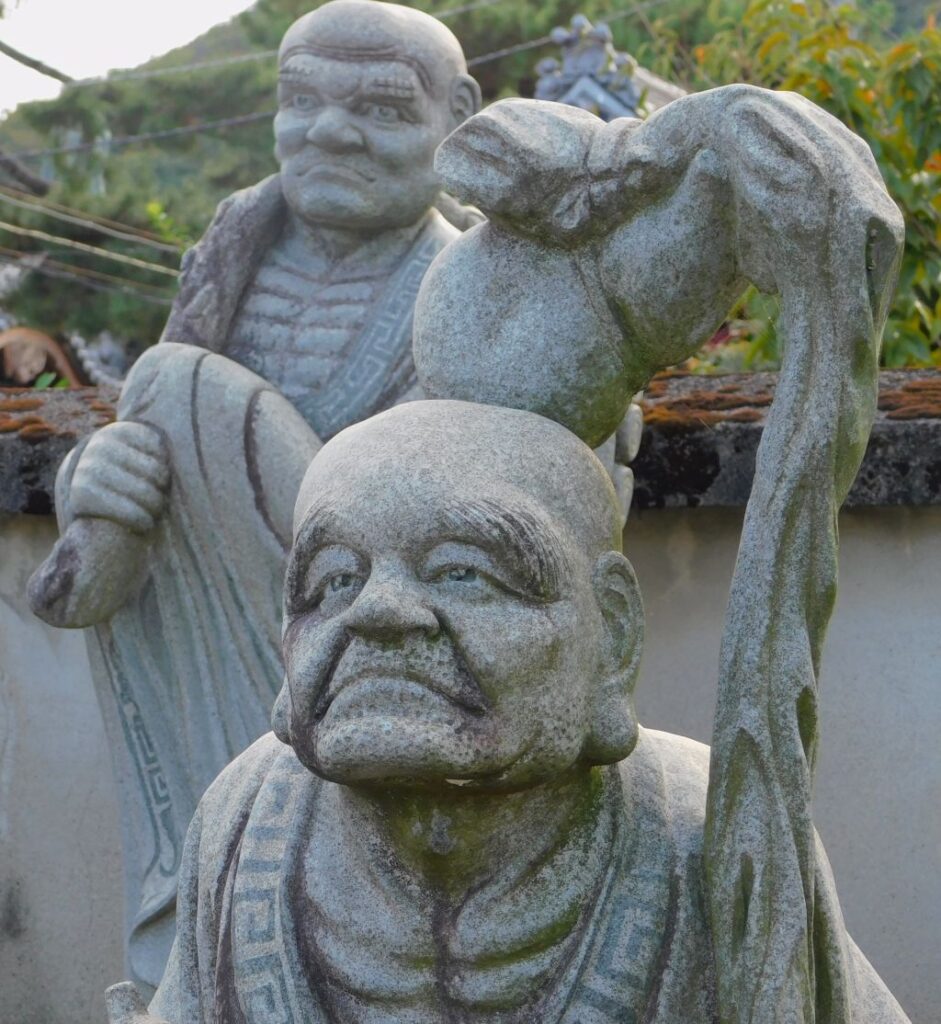
I felt rather conflicted as Lorenz and I entered the imposing temple complex of Zentsuji, lined with graceful wooden temples surrounding a tall tiered pagoda. Adjacent to the main temple grounds stood a second compound filled with historical and administrative buildings devoted to Kobo Daishi, the famed Buddhist monk, and holy spiritual guide for the henro michi. Sick and injured while struggling to cycle the southern section of the Shikoku pilgrimage, I had been angry with the monk, who according to legend, traveled with and helped all pilgrims.[1] Why had he not helped me, I wondered, as we strolled past Zentsuji’s long wall of lifelike and expressive statues in tribute to the many famous ancient Buddhist monks and thinkers?
In a ponderous building filled with archival materials collected from Kobo Daishi’s life, we paid our fee to visit the underground cave where the monk was born. I clasped Lorenz’s hands nervously, carefully feeling our way together down the pitch black stairway. In the lightless tunnel, the eerie recreated voice of the founder of Shingon Buddhism spoke. Humbled and in awe in the presence of the home of such a brilliant scholar and spiritual leader, I felt a shift, a softening. Perhaps I have misunderstood, I realized.
Now, standing at the office of Temple 88, I finally understood. Reaching out our hands proudly to receive the signed pilgrimage book, I saw that the true journey had never been the physical challenges of cycling and walking the pilgrimage, but instead an inner journey: to learn humility as we directly confronted our fears and human frailties. And to find the strength to overcome and defeat them. Kobo Daishi was there–not to prevent us from trials– but to walk with us and help us to grow from them.
We still had one last task to complete. Most pilgrims continue from Temple 88 back to the beginning, at Temple 1, making a full circle of the island. We whizzed joyfully down the quiet, lush mountain road from Okuboji back to our starting place in Tokushima Valley. Turning onto a busy street leading into bustling Awa City, we paused to drink some water. From the shadows, a strange apparition unexpectedly emerged. A wizened, hunched pilgrim, pulling a cart with all his belongings. The old man nodded in approval as we explained we had just finished our pilgrimage. “For the past twenty years, I, too, have been walking the henro michi,” he explained, wearily pointing to his dusty bags. “It is so hard to walk from temple to temple every day. Never resting. But it is my obligation and I do it with joy in my heart.”
There is a tradition that the people of Shikoku offer settai or aid to pilgrims, in the belief that Kobo Daishi is still there, hiding on the trail in the form of a pilgrim. As the itinerant pilgrim hobbled off, his right leg limping slightly—just like mine, I paused in surprise and wondered…..
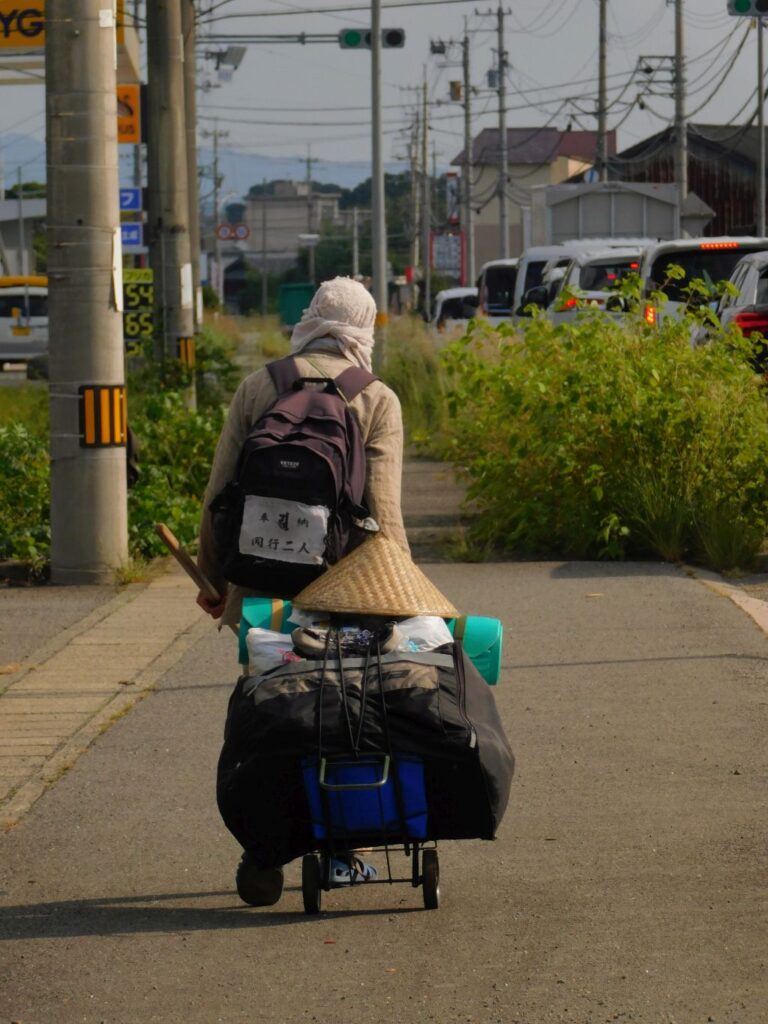
[1] All white henro jackets have a Japanese saying written down the back, “two traveling together,” implying that pilgrims are traveling with Kobo Daishi).
Follow us on Instagram @bike4breath or sign up for our blog at https://bike4breath.com/contact-us/. You might also enjoy reading our book, Breathtaking: How one family cycled around the world for clean air and asthma about our family’s cycling adventures around the world–through 24 countries across Europe, Asia, the South Pacific and North America.